Learn more about universal holding fixtures and how MICADO's innovative solutions make it a global leader in the aerospace and automotive industries.
What are universal holding fixtures (UHF)?
In the modern manufacturing of complex components for aerospace and automotive, the industry faces a unique challenge:
How can different component geometries be clamped efficiently and precisely without having to manufacture a specific fixture for each individual part? The answer lies in universal holding fixtures.
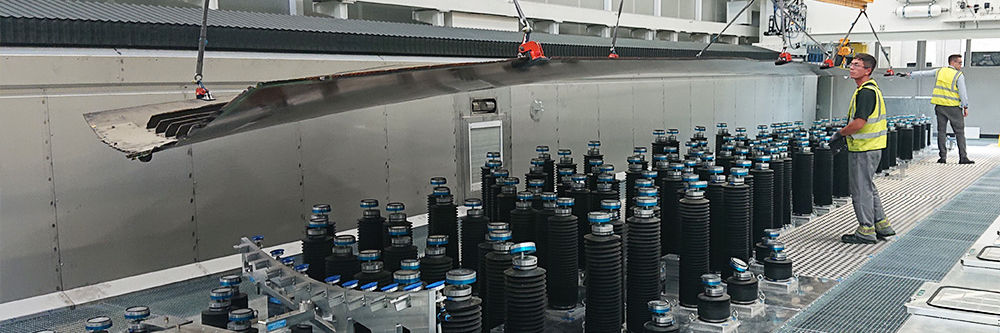
Unlike conventional holding fixtures that secure the component over its entire surface, universal holding fixtures rely on an intelligent system of vacuum suction cups. These adapt actively or passively to the local curvature of the component and are raised to the appropriate height in one dimension by actuators. The surface of the component to be clamped is thus replicated at specific points, typically at grid intervals of 200mm to 500mm.
The key feature: A single such fixture can be used for an entire family of components, which is why it is referred to as "universal".
The advantages of MICADO's universal holding fixtures
MICADO is one of the world's leading providers of universal holding fixtures and has made a name for itself in the industry through continuous innovation. The advantages of our solutions are numerous:
Flexibility and Cost-Effectiveness
- Customizable table size and individually positionable actuators
- One fixture for multiple component geometries
- Significant cost reduction compared to component-specific solutions
Robustness and Precision
- High rigidity for demanding drilling and milling operations
- Accuracy up to 0.1mm
- Sealed for wet machining
- Low maintenance due to high-quality components
Technological flexibility
- Stroke length up to 2 meters possible
- Multi-end effector systems
- Swiveling suction cups
- Quick and easy actuator replacement
Active or Passive: The right solution for every requirement
Depending on the specific requirements and the underlying production process, MICADO offers two system variants:
Passive Systems: Cost-efficient and robust
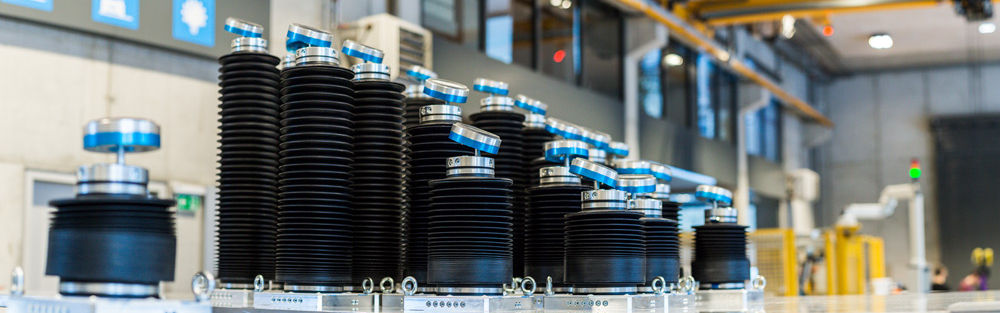
Passive universal clamping devices rely on pneumatically driven actuators and are characterized by their robustness:
- The actuators move sequentially, with the milling machine defining the end position as a stopper
- Direct integration into the CNC machine possible without a separate control system
- Very robust and reliable, even in high-moisture environments
- Cost-effective solution while maintaining very high accuracy
- Control is directly managed by the CNC machine
Active Systems: Fast and flexible
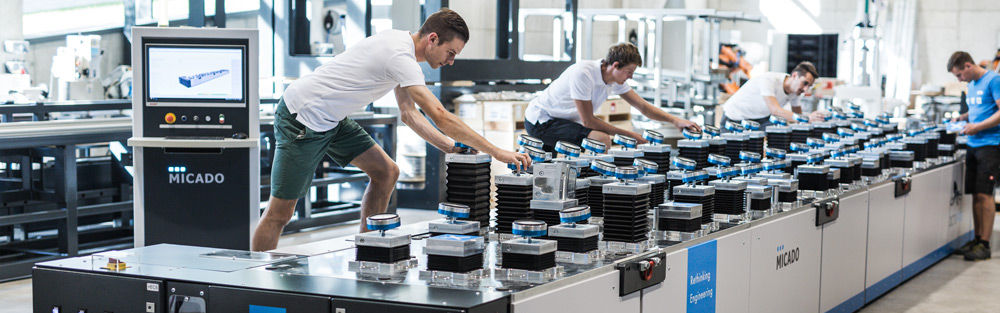
Active systems with servo drive and BECKHOFF control offer maximum flexibility:
- All actuators operate synchronously and minimize setup time
- Retracts can be performed during milling to prevent collisions with the milling head
- Active forming: The actuators can pull or push the component into the desired shape
- Intuitive operation via HMI (Human Machine Interface)
- Ideal for complex machining cycles and frequent part changes
You can find more information on the different systems here
Individual actuator positions for optimal results
A key advantage of MICADO systems is the flexibility in actuator positioning. If the components are known at the start of the project, the actuators can be perfectly adapted to their shape and requirements.
The result is compelling:
- Reduced number of suction cups required
- Maximum clamping quality
- Precise, collision-free positioning close to the milling tool
- Quick and efficient implementation of simple grid positioning, if needed
A wide range of end effectors for maximum adaptability
The versatility of MICADO clamping devices is particularly evident in the selection of end effectors. As an alternative to the proven round suction cups, an individual hard tool can be attached at any position:
MICADO Vacuum Suction Cups
- Freely movable
- Various sizes available
- Ideal for curved surfaces
- Even force distribution
Hard Tools
- For surface support
- Precise component alignment
- Improved component support in the monolithic area
- Preventing vibrations during machining
This combination makes component positioning particularly easy while ensuring optimal stability during machining.
The importance of professional consultation
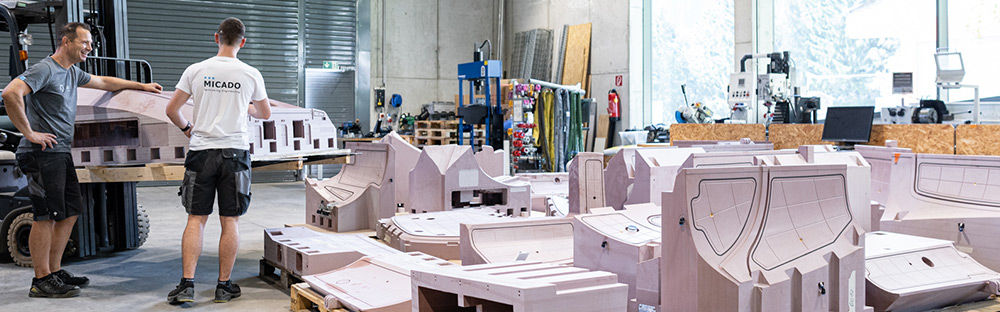
"Especially for universal vacuum clamping fixtures, professional consultation is crucial for project success," emphasizes Ing. Markus Rath, Head of Tool & Fixture Construction at MICADO.
The selection of the right solution depends on numerous factors:
- Component geometry and family
- Machining type and process
- Cycle time and production volume
- Environmental conditions
- Budget and ROI requirements
Through years of collaboration with renowned Tier 1 suppliers in the aerospace industry, MICADO possesses extensive expertise. Tool design always takes place in close coordination with the customers' technicians.
MICADO supports you throughout the entire project
From the initial idea to final commissioning, MICADO stands by your side as a partner:
- Conception: Joint analysis of requirements and development of the optimal solution
- Design: Detailed layout considering all relevant parameters
- Manufacturing: Precise implementation with high-quality components
- Commissioning: Support until successful integration into your production process
- Support: Continuous assistance even after project completion
Conclusion
MICADO's universal clamping fixtures offer a highly flexible, precise, and economical solution for manufacturing complex components in the aerospace and automotive industries. The ability to choose between active and passive systems, combine various end effectors, and individually position actuators makes this technology an indispensable tool in modern production.
With its expertise as one of the world's leading providers, MICADO helps companies find and successfully implement the optimal clamping solution for their specific requirements. The combination of technological innovation, professional consulting, and comprehensive service makes all the difference.
Interested in universal clamping fixtures for your production?
Frequently Asked Questions
during initial contact.
Answers to the questions we are asked most frequently — before the conversation begins.
A universal holding fixture (UHF) secures components not across their entire surface, but at specific points using vacuum cups mounted on height-adjustable actuators. These cups adapt to the local curvature, replicating the component's surface geometry in a grid typically ranging from 200 to 500 mm. This allows a single fixture to hold an entire family of components.
For flat, curved components that require drilling or milling, such as those used in the aerospace and automotive industries. A UHF system is most beneficial when processing many similar components with varying contours that would otherwise each require their own dedicated fixture.
In passive systems, pneumatic actuators extend sequentially, with the milling machine defining the end position as a stop. They do not require their own control system, operate directly via the CNC, and are highly robust, even in environments with significant water exposure. Active systems utilize servo drives and a Beckhoff control system with an HMI. All actuators extend simultaneously, which reduces setup time. Individual actuators can retract during machining to clear space for the milling head, and the component can be precisely pulled or pushed into shape.
The accuracy is up to 0.1 mm. The fixtures are rigid enough for demanding drilling and milling work. Where additional stability against vibration is required, we use hard tools instead of suction cups.
No, but it helps. If the components are known, we position the actuators exactly where the shape and machining require. This saves on suction cups, improves grip, and allows for suction cups to be placed close to the milling tool without risk of collision. Otherwise, a simple, regular grid can also be implemented quickly.
Delve deeper into the topic on the relevant section pages:
Clamping Fixtures (Mould Tools & Jigs) → Octopus FlexGrid (In-house Development) →