A universal clamping device—also known as a vacuum clamping table or multipoint clamping system—does not clamp the component across its entire surface, but rather at specific points using round vacuum cups that adapt actively or passively to the local curvature.
MICADO builds these systems for the milling of CFRP and GFRP structures, including the design of the mounting points and integration with machine controls.

Each suction cup is mounted on its own actuator and adjusted to the appropriate height, at least in one dimension. This allows the device to replicate the component surface—point by point, typically at grid intervals of 200 mm to 500 mm.
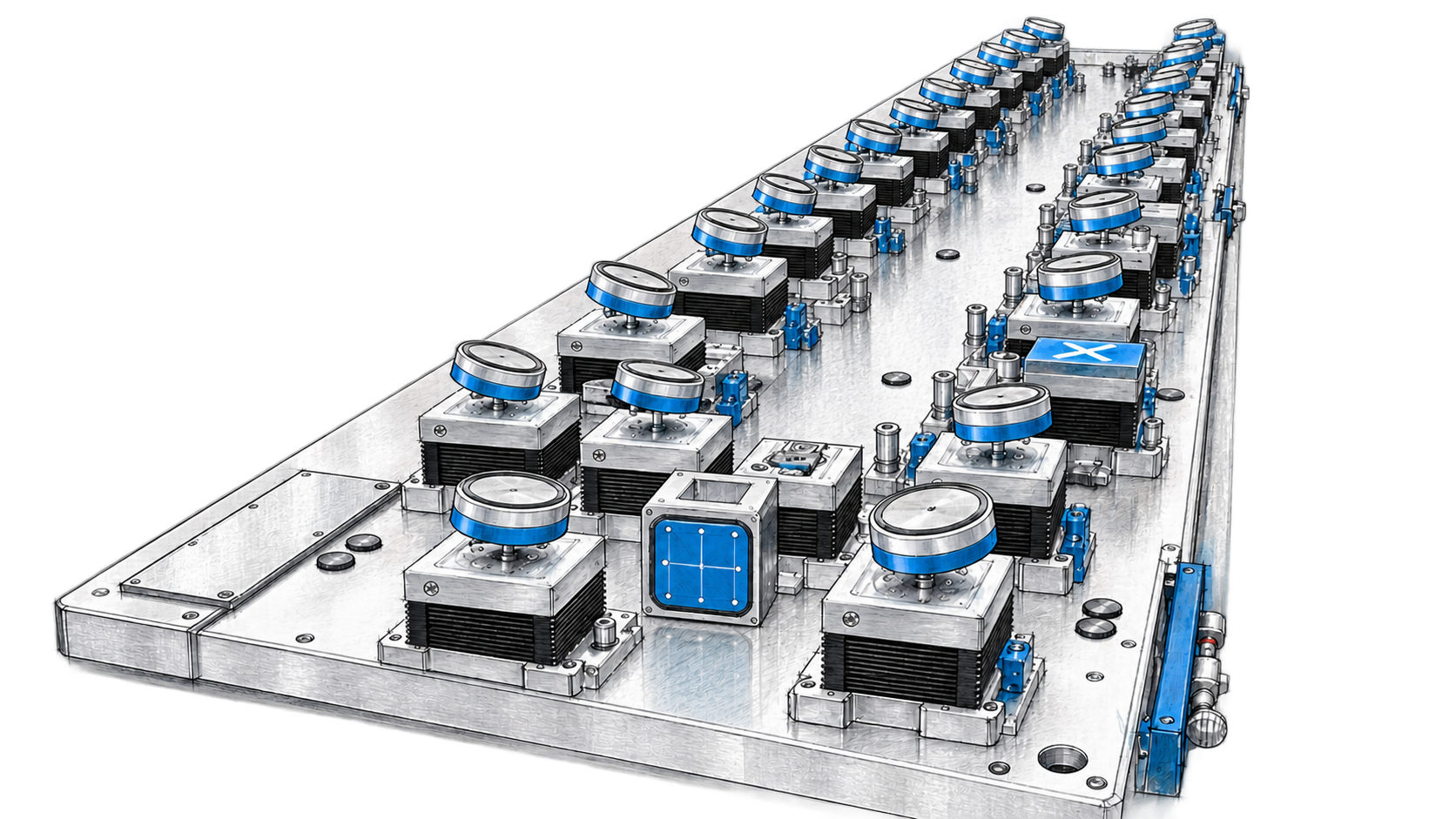
ACTIVE and PASSIVE solutions
Accuracy up to 0.1 mm
Customized table size and actuator positions
Multi-end effector
Sealed for wet machining
Swiveling suction cup
High rigidity for drilling and milling
Low maintenance due to high-quality components
Stroke length up to 2 m
Fast and easy actuator replacement
The choice between an active or passive vacuum clamping system depends on the requirements for the component, cycle time, and machining strategy.
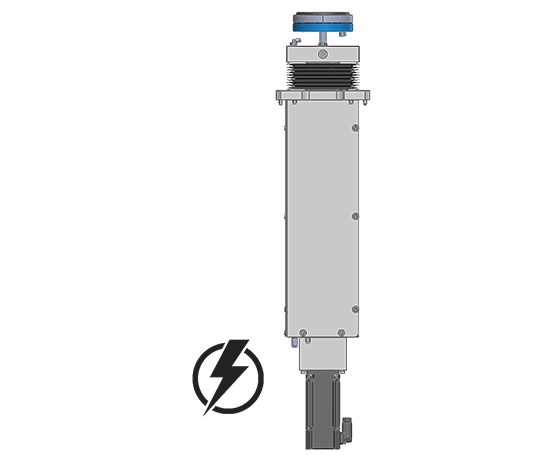
For fast and flexible automation tasks, servo-driven actuators combined with a BECKHOFF controller and HMI offer a powerful and precise solution for industrial applications.
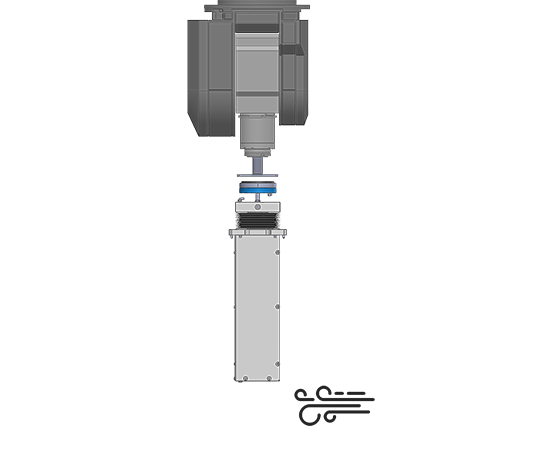
For robust and economical automation tasks, pneumatically clamped actuators without their own drive axis offer a reliable and cost-efficient solution for industrial applications.
Design, actuator selection, and practical examples of vacuum clamping technology – covered in detail on the MICADO blog.
If the components are known at the start of the project, we align the actuator positions precisely to their shape and machining strategy.
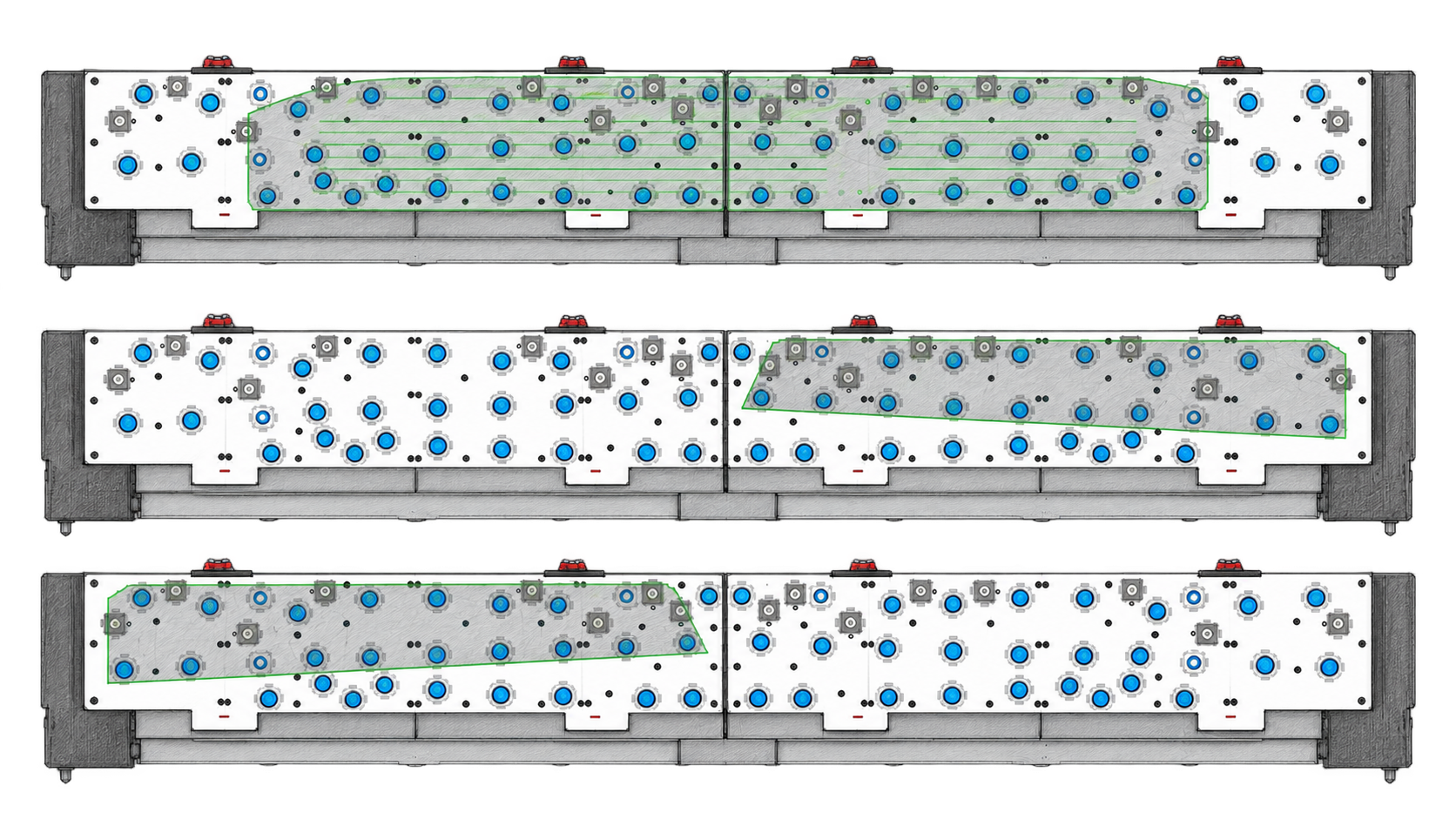
The result: fewer suction cups, better workpiece clamping during milling, and precise, collision-free positioning close to the tool.
The system's high flexibility even allows for the straightforward implementation of simple grid positions – quickly and efficiently.
As an alternative to the round suction cup, a custom hard tool can be attached at any position. This simplifies component positioning and improves support in monolithic areas, effectively suppressing vibrations during machining.
Freely movable, available in various sizes.
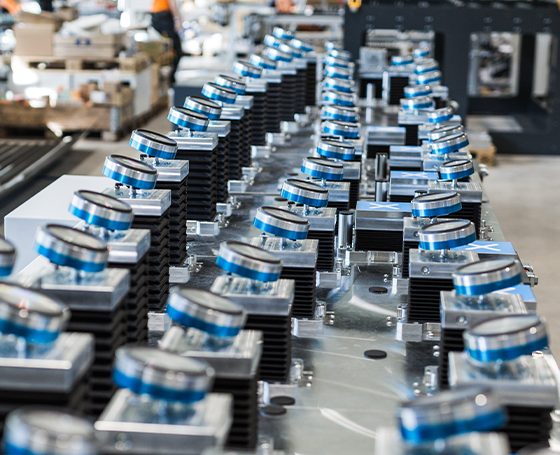
For surface support and precise component alignment.
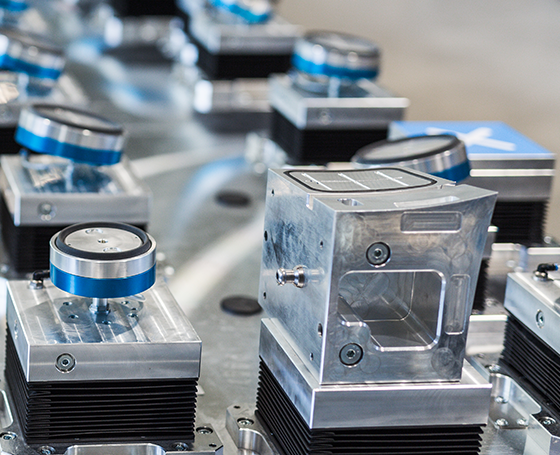
The modular and freely configurable architecture of the Octopus FlexGrid allows for adaptation to various component geometries via configuration data sets. Its range of application extends beyond machining to include welding, assembly, and inspection.
When a component program reaches the end of its lifecycle, the fixture is reconfigured for the next project instead of being scrapped.
Adaptive Pin Configuration
Freeform Geometries
Repeatability ±0.05
Large-area Composites


MICADO SMART ENGINEERING GMBH
9903 Oberlienz 66, Austria
+43 4852 72850 · office@micado.at